Introduction
In today’s fast-paced digital business world, companies are always looking to work smarter, offer better customer service, and make decisions based on real data.
Old ways of doing things — like using spreadsheets, doing tasks by hand, and having separate software tools — aren’t enough anymore to keep up with the competition.
That’s where CRM and ERP systems come in.
These two types of technology have different jobs, but they are both important parts of how modern businesses run. When used together, they help make things more efficient, improve teamwork, and create better experiences for both customers and employees.
In this article, we’ll explain what CRM and ERP are, what features they offer, the advantages they bring, how they differ from each other, how they can work together, and where they’re headed in the future.
This will help you understand why these systems are so important for running a successful business.
What is CRM?
Customer Relationship Management, or CRM, is a type of software that helps companies handle their interactions with customers, potential customers, and people who might become customers.
Its main purpose is to create stronger connections, boost sales, and offer better, more personalized service.
Main features of CRM include:
Sales Management – It helps track potential customers, sales opportunities, and the path to closing deals, which can help increase the number of successful sales.
Customer Support – It allows for managing customer issues, complaints, and past service interactions, making it easier to provide good care and support.
Marketing Automation – It enables the creation of focused marketing campaigns, tracking how people engage with these campaigns, and helping to develop leads into customers.
Data Centralization – It brings all customer information into a single place so that sales, marketing, and support teams can easily access and use it.
Analytics & Insights – It offers detailed reports on how customers behave, how well sales are performing, and how effective marketing campaigns are.
Some popular CRM systems include Salesforce, HubSpot, Zoho CRM, and Microsoft Dynamics 365.
What is ERP?
Enterprise Resource Planning, or ERP, is a complete business management system that combines different business processes like finance, human resources, supply chain, inventory, and manufacturing into one place.
Its goal is to make things run more smoothly, cut down on repeated tasks, and give a full picture of how the company is doing.
Main Features of ERP:
Finance and Accounting – Helps with things like paying employees, sending out invoices, making budgets, and keeping track of rules and regulations.
Supply Chain Management – Keeps an eye on getting goods, moving them around, and working with suppliers.
Inventory and Warehouse Management – Keeps track of how much stock you have, what orders are coming in, and when deliveries are expected.
Human Resources – Helps with hiring people, keeping track of when they come to work, paying them, and reviewing how well they’re doing their jobs.
Manufacturing – Plans when to make products, monitors how equipment is used, and makes sure the quality of the products is up to standard.
Some examples of ERP systems include SAP, Oracle NetSuite, Odoo, and Microsoft Dynamics 365 ERP.
CRM vs. ERP: Key Differences
While CRM and ERP might look alike at first glance, they actually have very different main purposes.
Here’s a breakdown of how they differ:
Aspect | CRM (Customer Relationship Management) | ERP (Enterprise Resource Planning)
———————|—————————————-|————————————-
Primary Focus | Managing customer relationships and sales | Managing internal processes and resources
Users | Sales, Marketing, Customer Service | Finance, HR, Operations, Logistics
Goal | Increase sales and improve customer loyalty | Improve efficiency and reduce costs
Data Managed | Customer data (contacts, leads, feedback) | Business data (inventory, payroll, financials)
Time Horizon | Future-focused (growth and acquisition) | Present-focused (efficiency and control)
In simple terms: CRM helps grow revenue, while ERP helps cut costs.
Benefits of CRM
Better Customer Relationships – Having all customer information in one place makes it easier to tailor interactions and build stronger connections.
Improved Sales Performance – Keeping track of sales leads and opportunities helps turn more prospects into customers.
Efficient Marketing – Focused marketing efforts based on customer data lead to better results and higher returns on investment.
Enhanced Customer Support – Quick access to customer history allows faster problem-solving and better service.
Data-Driven Decisions – Using customer data and insights helps make smarter, more informed business choices.
Benefits of ERP
Process Automation – Lessens the need for manual tasks and cuts down on mistakes made by people.
Cost Savings – Helps remove wasteful practices and makes the best use of available resources.
Collaboration Across Departments – Ensures all teams are working with the same up-to-date information.
Regulatory Compliance – Includes tools that help follow rules and lower the chances of legal issues.
Scalability – Makes it simple to adjust and grow with the business as it expands.
Why Businesses Need Both CRM and ERP
Many companies often wonder: Should we invest in CRM or ERP?
The reality is that both systems work well together.
CRM helps attract customers, while ERP helps manage and serve them effectively.
CRM gives you a better understanding of your customers, and ERP ensures you can meet their needs efficiently.
When used together, they provide a complete picture of how your business operates and how customers interact with it.
CRM and ERP Integration
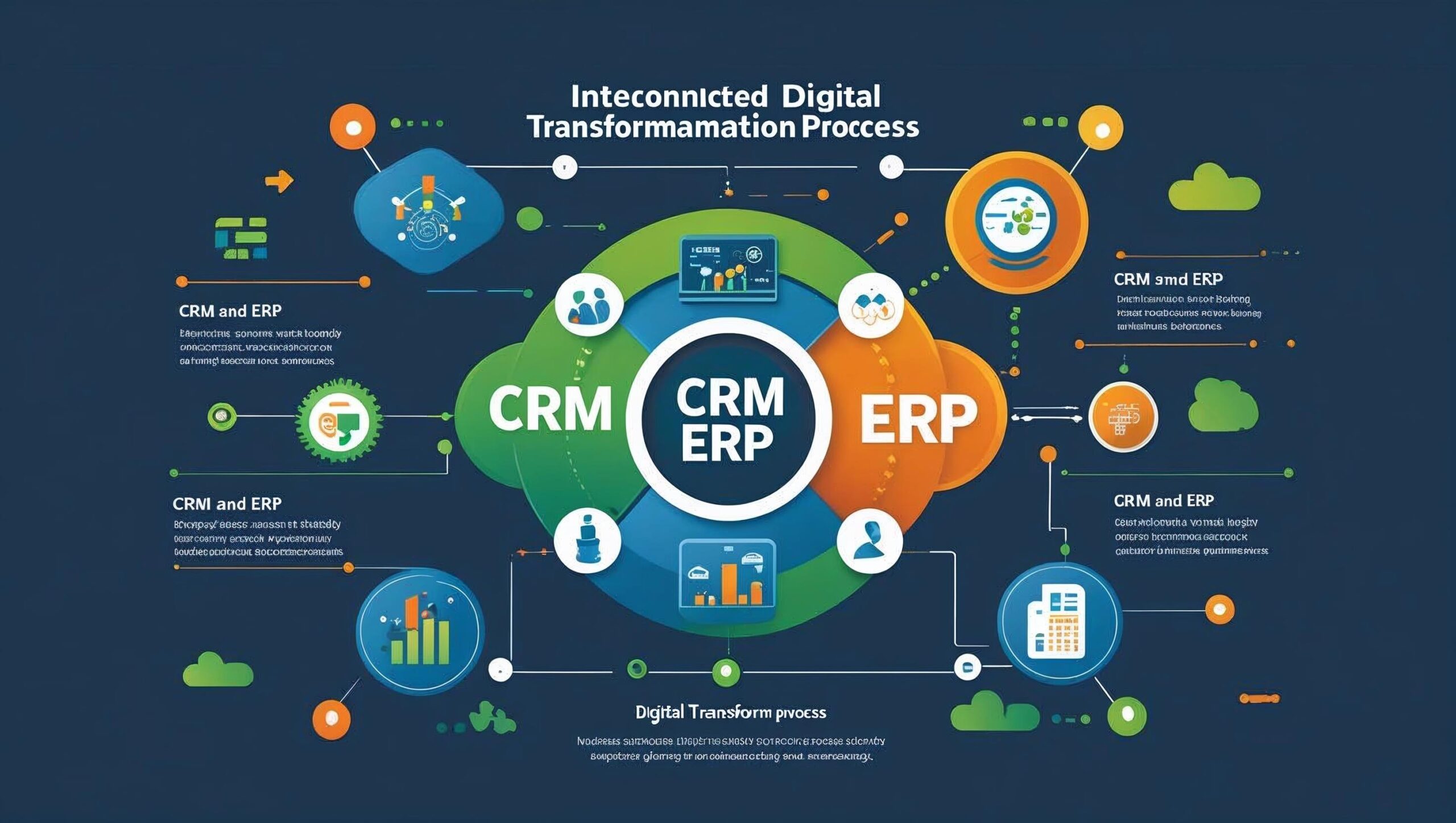
When a company connects its CRM and ERP systems, it creates a smooth way for information to flow between different parts of the business.
This helps avoid information being trapped in separate departments and makes it easier for everyone to make informed decisions.
Example of How Integration Helps:
A salesperson using the CRM can check current inventory levels from the ERP system before finalizing an order.
This helps prevent overselling and improves customer satisfaction.
A finance team using the ERP can view a customer’s payment history from the CRM, making the billing process more efficient and reducing errors.
A customer support representative using the CRM can look up shipping details from the ERP to provide customers with up-to-date information quickly.
By integrating CRM and ERP, all teams work with the same accurate data, which helps departments stay aligned and operate more effectively.
Industry Use Cases
Retail & E-commerce
CRM helps customize the shopping experience for customers.
ERP handles the supply chain, inventory, and delivery processes.
Manufacturing
ERP manages the production process and materials used.
CRM keeps track of relationships with distributors and clients.
Healthcare
CRM is used to handle communication with patients.
ERP takes care of billing, managing staff, and ensuring compliance with regulations.
Real Estate
CRM helps in building relationships with potential buyers and managing property sales.
ERP manages contracts, legal matters, and financial aspects.
Challenges in Implementing CRM and ERP Systems
Even though these systems are very useful, there are some difficulties to consider:
Costs can be high, especially when you need a custom setup.
Employees need time to learn how to use the new systems properly.
Connecting CRM and ERP systems together can be tricky and require careful handling.
Moving data from old systems to new ones might result in mistakes or lost information.
Some staff might be hesitant to switch from their current methods to the new system.
Companies that plan well, provide enough training, and get good support from their vendors can manage these challenges effectively.
Future of CRM & ERP
The next generation of CRM and ERP systems is being shaped by Artificial Intelligence, Cloud Computing, and the Internet of Things.
Key Trends:
AI-Powered Insights – Businesses will use predictive analytics to foresee customer needs and trends.
Cloud-Based Systems – These systems offer flexibility, scalability, and cost savings.
Mobile-Friendly Platforms – Employees can use these systems from anywhere using their mobile devices.
IoT Integration – ERP systems will connect with IoT devices to provide real-time data and monitoring.
Conversational Interfaces – AI-powered chatbots will be part of CRM systems to offer quick and instant support.
In the future, CRM and ERP systems will do more than just store data – they will provide real-time insights that help make faster and better business decisions.
Conclusion
CRM and ERP systems are not just nice to have anymore—they are essential for businesses today.
CRM helps companies get to know their customers better, attract new ones, and keep existing ones coming back. ERP, on the other hand, makes sure that the day-to-day operations of a business are running smoothly and without extra costs.
When these two systems work together, they create a strong and effective environment that helps a business grow, improve how it interacts with customers, and stay around for the long term.
Companies that take on both CRM and ERP, and also use new technologies like artificial intelligence and cloud computing, are more likely to lead in their fields.
In short:
CRM builds relationships.
ERP builds efficiency.
Together, they build the future of business.
Copyright 2025 © Kartik EngiTech Services Private Limited. All right reserved.